
Where did that watch come from?

In crossing a heath, suppose I pitched my foot against a stone and were asked how the stone came to be there, I might possibly answer that for anything I knew to the contrary it had lain there forever; nor would it, perhaps, be very easy to show the absurdity of this answer. But suppose I had found a watch upon the ground, and it should be inquired how the watch happened to be in that place, I should hardly think of the answer which I had before given, that for anything I knew the watch might have always been there. Yet why should not this answer serve for the watch as well as for the stone? Why is it not as admissible in the second case as in the first? For this reason, and for no other, namely, that when we come to inspect the watch, we perceive – what we could not discover in the stone – that its several parts are framed and put together for a purpose, e.g., that they are so formed and adjusted as to produce motion, and that motion so regulated as to point out the hour of the day; that if the different parts had been differently shaped from what they are, of a different size from what they are, or placed after any other manner or in any other order than that in which they are placed, either no motion at all would have been carried on in the machine, or none which would have answered the use that is now served by it. To reckon up a few of the plainest of these parts and of their offices, all tending to one result; we see a cylindrical box containing a coiled elastic spring, which, by its endeavour to relax itself, turns round the box. We next observe a flexible chain – artificially wrought for the sake of flexure – communicating the action of the spring from the box to the fusee [a wheel upon which a watch chain is wound and which equalises the power of the mainspring]. We then find a series of wheels, the teeth of which catch in and apply to each other, conducting the motion from the fusee to the balance and from the balance to the pointer, and at the same time, by the size and shape of those wheels, so regulating that motion as to terminate in causing an index, by an equable and measured progression, to pass over a given space in a given time. We take notice that the wheels are made of brass, in order to keep them from rust; the springs of steel, no other metal being so elastic; that over the face of the watch there is placed a glass, a material employed in no other part of the work, but in the room of which, if there had been any other than a transparent substance, the hour could not be seen without opening the case. This mechanism being observed – it requires indeed an examination of the instrument, and perhaps some previous knowledge of the subject, to perceive and understand it; but being once, as we have said, observed and understood – the inference we think is inevitable, that the watch must have had a maker—that there must have existed, at some time and at some place or other, an artificer or artificers who formed it for the purpose which we find it actually to answer, who comprehended its construction and designed its use.

Paley, W., Natural Theology ch. 1; in The Works of William Pale
The Struggle for Love

I found this gem of a sermon from Tim Keller on happiness from Genesis 29:15 – 35. This stood out to me –

Through all of life, in every event, and through every aspect of your life there always will be a ground note running of cosmic disappointment and you’re not going to lead a wise life until you know that. See Jacob goes to bed with the one, I finally got the one, the one thing, the one person who is going to make my life okay. But what we are told literally in the Hebrew says ‘but in the morning behold, it was Leah.” Now I love Leah and I’m protective of her and I love what we’re about to learn about her but let me tell you this, Leah represents something. Every time you get started into a relationship, every time you move into a marriage, every time you get a job, every time you get into a new project, into some new pursuit and you think this finally is going to make my life right, I want you to know, in the morning it’s always Leah. You go to bed with Rachel, in the morning it will always, always be Leah. And nobody put it better than C.S. Lewis who said “Most people if they really learned how to look into their own hearts, would know that they do want, and want acutely, something this world can never give them.” There are all sorts of things in this world that offer to give it to you but they never keep their promise. The longings which arise in us when we first fall in love or first think of some foreign country or first take up some subject that excites us, these are longings which no marriage, no travel, or no earning will ever satisfy. I’m not speaking of what would ordinarily be called unsuccessful marriages or trips or so on, I’m speaking of the very best possible ones. There is always something we have grasped at in that first moment of longing that just fades away in the reality. The spouse may be a good spouse, the scenery has been excellent, it’s turned out to be a good job, but IT, the thing that we thought was going to be in the centre of it, always evades us in the morning. It’s always Leah.

Get it (free!) here.

The biggest surprise at Neutral Bay is the kids

Ministry always surprises me. It goes like this – I start a new ministry, I hate it for a while, then I love. It was the same when I started a new church (although ‘hate’ is probably a little too strong here). A few weeks in and I certainly wasn’t enjoying it, and I was exhausted every Sunday. But it didn’t take long until I started to enjoy myself. It’s now a little over a year since I started and there has been lots of surprises and joys along the way but the biggest surprise, and the greatest joy, has been the kids.

I didn’t really want to do kids ministry and if I’m complete honest my attitude was something along the lines of ‘I’ll do a year with kids and that will be that’. But it wasn’t long before I started to love it. It was alway hard work and I still have a lot to learn, but at the same time it was fun and a blessing to spend time with these kids. I’m sure I have learnt as much from them as they have from me.

This current nostalgia comes because last Sunday was my last week with them and I find I’m pretty sad about it.  So I guess there’s a new option creepy its way onto the ever-growing list I like to call ‘What the heck am I going to do once college is over!”.

John Stott on sexual purity

One of the things that I found hardest to get used to at college was chicks’ chapel. I can’t really explain why – I just found it a bit odd.

But I have grown to really love it. Because there’s not heaps of girls at college 2nd, 3rd and 4th year girls all get to preach at some point which is great. I love being taught by those I study along side of.

For the last 2 weeks Jane Tooher, who is on faculty at college, has preached a 2 part sermon from 1 Thessalonians 4 on sex and sexual purity. Towards the end of part 2 she shared a John Stott quote about sexual purity taught in the Bible and how we respond to it as single people. I thought it was so good that I would share it too.

“We too must accept this apostolic teaching, however hard it may seem, as God’s good purpose both for us and for society. We shall not become a bundle of frustrations and inhibitions if we embrace God’s standard, but only if we rebel against it. Christ’s yoke is easy, provided that we submit to it. It is possible for human sexual energy to be redirected both into affectionate relationships with friends of both sexes and into the loving service of others. Multitudes of Christian singles, both men and women, can testify to this. Alongside a natural loneliness, accompanied sometimes by acute pain, we can find joyful self-fulfilment in the self-giving service of God and other people.” (Stott, The Message of Thessalonians 84-45).

YES to you

I just started reading Recovering Biblical Manhood and Womanhood and this poem by Ann Kiemel Anderson is included in the foreword.

Timely, and more than a little hard to dwell on right now.

Jesus, if this is your will,
then YES to being single.
In my deepest heart I want to marry,
to belong to a great man;
to know that I am linked to his life…
and he to mine…
following Christ and our dreams together…
but You know what I need.
if I never marry, it is YES to you.

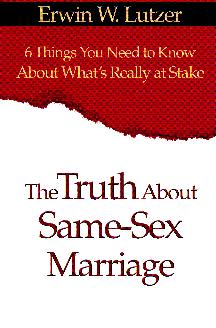
The Truth About Same-Sex Marriage

I spent most of my afternoon reading The Truth About Same-Sex Marriage: 6 Things You Need to Know About What’s Really at Stake by Erwin W. Lutzer.

lutzer1.jpg

I think this is an excellent book that encourages all Christians to think biblically about a delicate issue. But it doesn’t just encourage thought – it encourages action.

The thing that I like most about this book is that, in his intro, Lutzer first grounds us in the truths that are so often forgotten by Christians as we discuss these issues

We must lower our voices in this debate, speaking with respect and dignity. No matter how strongly we oppose the homosexual agenda, we are first of all called to be Christians who have the privilege of representing Christ to all the communities of the world, regardless of class, colour, nationality or “gender orientation”. […] We must never speak of homosexuality as if it is the one sin worthy of the eternal flames. Yes, the Bible does condemn homosexuality, but it also condemns a host of other sins that are rampant in the best of our churches. If all we do is shout at homosexuals across a chasm, be assured we will hear only the echo of our own voices ringing in the air.

Those sins are not only rampant in our churches, but in our lives as well. A point which Lutzer takes up in chapter 1.

We must repent of the double standard that sees the sin of the homosexual behaviour in a different category than adultery, premarital sex and pornography. We must plead guilty to the charge of bigotry, for we have acted as if our sins are minor in comparison to those of the homosexual  community, whose sin we think are of a different nature and category. This attitude of condemnation has caused us to lose our voice in the wider culture.

In my opinion this is our biggest problem. Why does the gay community think we are judgmental? Because often times we are!

This book is easy to read and quite short and yet covers a great deal. Lutzer discusses the effects of same-sex marriage on the tradition marriage (grounded of course in the Bible’s covenant based marriage), as well as its effect on children, the issue of adoption, the common arguments in affirming same-sex marriage, how and why the church should act and our continuous need for repentance, humility and hearts that seek God always.

At the beginning of the book Lutzer shares his motivation and thought process behind writing the book. He ends with this interesting paragraph.

Let no one say that we have to choose between loving homosexuals and opposing same-sex marriage. Biblically, love is defined not as license to legitimatize sinful behaviour of any kind, but love helps us to see there is a better way. Obviously, we must be as concerned about our own sins as we are about the sins of the homosexual community. We must be concerned enough to speak out about any action, heterosexual or homosexual, that violates God’s intended plan for marriage and the family.

Food for thought.

I never realised I’ve lived a sheltered life…

…until now.

I have life experience. I don’t mean that as the polite way of saying ‘I’m old’ but I always would have said I’ve experienced a lot of things – not much shocks me, not much is abnormal. I spent enough years of my life living outside of the ‘Christian experience’ so I’ve seen and done a lot of things.

But the last week has been full of new things. Things that have shocked me, that have felt so far outside of normal I can barely comprehend them. Not in my life, but in the lives of those close to me. So as I find myself speechless and feeling completely useless, I start the search for some kind of answer or perhaps even comfort.

And have you completely forgotten this word of encouragement that addresses you as children? It says, “My son, do not make light of the Lord’s discipline, and do not lose heart when he rebukes you, because the Lord disciplines those he loves, and he chastens everyone he accepts as his child.” Endure hardship as discipline; God is treating you as his children. For what children are not disciplined by their father? If you are not disciplined – and everyone undergoes discipline – then you are not legitimate children at all. Moreover; we have all had parents who disciplined us and we respected them for it. How much more should we submit to the father of the spirits and live! Our parents disciplined us for a little while as they thought best; but God disciplines us for our good, that we may share in his holiness. No discipline seems pleasant at the time, but painful. Later on, however, it produces a harvest of righteousness and peace for those who have been trained by it. Therefore, strengthen your feeble arms and weak knees. Hebrews 12:5-12

Christian Suffering

Dear friends, when the fiery ordeal arises among you to test you, don’t be surprised by it, as if something unusual were happening to you. Instead, as you share in the sufferings of the Messiah rejoice, so that you may also rejoice with great joy at the revelation of His glory. If you are ridiculed for the name of Christ, you are blessed, because the Spirit of glory and of God rests on you. None of you, however, should suffer as a murderer, a thief, an evildoer, or as a meddler. But if [anyone suffers] as a Christian, he should not be ashamed, but should glorify God with that name. For the time has come for judgment to begin with God’s household; and if it begins with us, what will the outcome be for those who disobey the gospel of God?

And if the righteous is saved with difficulty, what will become of the ungodly and the sinner?

So those who suffer according to God’s will should, in doing good, entrust themselves to a faithful Creator.

1 Peter 4:12 – 19