Chapel….

Praying_HandsZ

Great sermon this morning from David Hohne on prayer.

God ALWAYS answers our prayers. Sometimes he answer with a no. So how do we know we can still trust him?

Arguably the biggest No he gave was to his son. Jesus prayed in the Garden of Gethsemane –

My Father, if it is possible, may this cup be taken from me

Whatever our ‘cup’ is, if the answer is no, are we able and willing to finish our prayer as Jesus did – yet not as I will, but as you will?

My awesome brothers….

business_five

So I have been pretty down lately. Not sure why but lots of little things about college have been getting to me. Especially things about living in the community of Carillon House. Not that there aren’t great things about it and not that the girls I live with aren’t amazing, but there are really hard things about it too. Things like not getting to decide what you eat for dinner, or what time you eat or not being able to cook for yourself and things like that, that people living in their own house might take for granted (or even complain about). Its the grown-up things that we all wish we got to do.

Anyway enough complaining… what I really want to share is how great the guys in my year group are. There are a couple in particular (hopefully you know who you are!) who I know go out of their way to care for me. Amidst the hardship of college its so special to spend time with these men, my brothers. To share with them, study with them, pray with and for them.

So I say thank you to my dear brothers in Christ.

‘I thank my God every time I remember you. In all my prayers for all of you, I always pray with joy because of your partnership in the gospel from the first day until now, being confident of this, that he who began a good work in you will carry it on to completion until the day of Christ Jesus.’1:3-6

The Future of Justification

the-future-of-justification

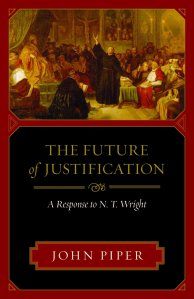
Our first assessment of the year was a book review. I reviewed The Future of Justification by John Piper.

This was a hard assessment, and although it caused me much stress it was a rewarding issue to engage with. I blogged about it here.

Since getting my mark back I’m feeling brave – so here is my review.

John Piper’s book ‘The Future of Justification’ is a response to N.T. Wright’s interpretation of justification in the Pauline letters. This book review will give an assessment of Piper’s argument by reviewing his presentation and rejoinder of the major points, and will conclude with an overall critique of the highlights and weaknesses of the book.

Piper starts his introduction by explaining the importance of the issues he is about to address, saying ‘How we live and what we teach will make a difference in whether people obey the gospel of our Lord Jesus’. He states his reason concisely and quickly moves on to introduce to his readers N.T. Wright and the ‘top-to-bottom rethinking of Paul’s theology’ he is about to respond to. He then introduces the eight points he will aim to address over the course of the book. They are: (1) that the gospel is not about how to get saved (2) justification is not how you become a Christian (3) justification is not the gospel (4) we are not justified by believing in justification (5) the imputation of God’s own righteousness makes no sense at all (6) future justification is on the basis of the complete life lived (7) first century Judaism had nothing of the alleged self-righteous and boastful legalism and (8) God’s righteousness is this same as the covenant faithfulness.

Before delving into his arguments, in chapter one, Piper offers a caution regarding biblical theological methods and categories. He makes clear his advocation of reading biblical text in light of the redemptive history, but warns ‘about the possible distorting effect of the categories of biblical theology, especially when using non-biblical sources prima facie to define first century ideas and culture. Piper also uses this chapter to call attention to Wright’s excitement at finding ‘”new” and “fresh” interpretations on Paul’. He quotes Wright as saying we ‘need a new generation of teachers […] who will give themselves totally to the delighted study of the text and allow themselves to be taken wherever it leads, to think of new thought arising out of the text and to dare to try them out in word and deed’.(pg 37) Piper disputes this by concluding that reading the Bible and confirming things that people have known for centuries is equally as good as discovering something new in the text and offering his opinion that ‘we need a new generation of preachers who are not only open to new light that God may shed upon his word, but are also suspicious of their love of novelty and are eager to test all their interpretations of the Bible by wisdom of the centuries’.

In the following 3 chapters Piper launches into a sustained and detailed discussion of the key definitions involved in the New Perspective debate. He starts by challenging Wright’s understanding of justification as ‘a declaring one as a covenant member’. Cleverly using Romans 3:4 and 1 Timothy 3:16, Piper substitutes the word justification for Wright’s definition of ‘declaring one as a covenant member’ to substantiate his view that this definition ‘does not work’. Piper next discusses that ‘indispensable in Wright’s explanation is that fact that the law-court scene in view is the final justification’ and that God’s righteousness can be defined as keeping the covenant, judging impartiality and proper dealing with sin. Supporting his argument with Romans 1:18, 21, 23, 2:23-34, 3:10 and 3:23 Piper demonstrates that this is a definition of what God’s righteousness does, not what is it, and that a greater definition is required.

Piper then challenges the law-court scene that Wright uses to ‘illumine the dynamics of justification’. The problem he shows of ‘Wright’s way of setting up the law-court imagery is that it does not seem to come to terms with the fact that the judge is omniscient’. This leads Piper into a brief discussion of the imputation of righteousness, which he will expound in a future chapter. Chapter four ends with a succinct summary of the arguments up to that point and then launches into his main points of disagreement.

In chapter five, Piper takes on the first of the points he laid out in the introduction: that the gospel is not about how you get saved. Wright is quoted ‘I must stress again that the doctrine of justification by faith is not what Paul means by “the gospel”. It is implied by the gospel; when the gospel is proclaimed, people come to faith and so are regarded by God as members of his people. But “the gospel” is not an account of how people get saved’. Piper presents two main rebuttals to this claim. The first compelling argument is that without a message of justification, the Lordship of Jesus is not good news; rather it ‘is an absolutely terrifying message to a sinner […] guilty of treason and liable to execution’. The second argument is a presentation of the definition of the gospel from Paul himself. Piper says 1 Corinthians 15:1-3 is ‘the closest Paul comes to a definition of his gospel’. He expounds these verses and shows that Paul explicitly says that ‘we are saved through the gospel […] and that the gospel is a message that Christ died “for our sins”’. Piper arguments are present in a way that seems to easily controvert Wright’s position.

The next issue that Piper considers, in chapter six, is that justification is not how you become a Christian. He cites Wright as saying justification ‘was not so much about “getting in”, or indeed about “staying in”, as about “how you could tell who was in”’. Piper points out that Wright goes to great length to distinguish justification from the call that happens immediately prior to justification. Piper can’t explain ‘Wright’s zeal to remove justification from the event of becoming a Christian’. This is one of Piper’s most effective arguments as he simply states the illogical nature of Wright’s position thus far.

In chapter seven, Piper opposes Wright’s claim that future justification is on the basis of the complete life lived and delves into the place of our works in justification. Wright says ‘The Spirit is the path by which Paul traces the route from justification by faith in the present to justification, by the complete life lived, in the future’. Piper sees that Wright relies heavily on Romans 2:13 to support this argument, and so spends a significant amount of time on a detailed exegesis of Romans 2. He concludes, persuasively, that in this verse ‘Paul makes a statement that in this context functions as a principle […] rather than a declaration about how that doing relates to justification’. Piper then focuses briefly on how he sees works relating to justification. He states that he believes ‘in the necessity of a transformed life of obedience to Jesus by the power of the Spirit through faith as public evidence […] of faith […] for all who will be finally saved’. This element of the argument from Piper is uncharacteristically brief and lacking in detailed explanation, although he does return to this point in the conclusion of the book.

In chapter eight, Piper engages with the view that Wright presents regarding the imputation of righteousness. While an initial presentation seems to reflect agreement on imputation, Piper demonstrates where the differences begin to appear with the following quote from Wright:

There is indeed a status which is reckoned to all God’s people [this would be the meaning of imputation in Wright’s system], all those in Christ; and this status is that of dikaiosune, ‘righteousness’, ‘covenant membership’; and this covenant membership, in order to be covenant membership, must be a covenant membership in which the members have died and been raised, because until that has happened they would be in their sins.

Piper helpful acknowledges points of agreement, but also points out that there are areas in which Wright is ambiguous in his communication of his definition of the imputation of righteousness. Piper illustrates his ‘desire to see Wright’s construction of Pauline theology as saying the same thing as the Reformed tradition’ but concludes that it does not. He says ‘Wright’s position on the meaning and the basis of justification are not “substantially” the same as what has been affirmed in the Reformation tradition by “imputed righteousness” on the basis of “faith alone”.

One of the major elements of the debated New Perspective is that first century Judaism had nothing of the alleged self-righteous and boastful legalism. Piper covers this in chapters nine and ten. Wright believes in the first century ‘the Jew keeps the laws out of gratitude, as the proper response to grace – not, in order to get into the covenant people, but to stay in. Being “in” in the first place was God’s gift’. Piper’s attention to this detailed on the debate is thorough. His main argument finds him entering discussion on the meaning of legalism. Piper represents Wright as believing the only form of legalism is Pelagianism. His footnotes in this chapter provide some of the most informative sections of his discussion, outlining the soft and hard legalism. This division is paramount to the rest of his argument. Piper brings up two arguments that are particularly convincing in this chapter. One is that Wright’s view of first century Judaism ‘seems to fly in the face of what Jesus says about how the Pharisees in general experienced and shared mercy’. The second is that while Wright argues the problem with Judaism was not pride in works, but pride in ethnicity, these both share ‘the same root as legalism, namely, self-righteousness’.

In chapter eleven, Piper deals with Wright’s treatment of the righteousness of God as his covenant faithfulness, and the effect of this understanding on the idea of imputed righteousness. Piper says that Wright regards this concept as ‘at best a category mistake’. He reminds the reader of his conclusion in chapter three that covenant faithfulness is what God’s righteousness does not what it is and then re-poses the key question in this issue:

When the judge finds in our favour, does he count us as having the required God-glorifying moral righteousness – an unwavering allegiance in heart and mind and behaviour? And does this counting as righteousness happen because we meet this requirement […] or because God’s righteousness s counted as ours in Christ?

Piper argument for the imputed righteousness of God is powerfully compelling, as he draws the readers’ attention to ‘biblical language of imputation’ in Romans 4:3-8, 5:18-19, Philippians 3:9, 1 Corinthians 1:30 and perhaps most strikingly 2 Corinthians 5:21. Piper’s exegesis of the last text is thorough, persuasive and brings him to the end of his response to N.T. Wright.

Possibly the most marked element of Piper’s response is the display of respect in his attitude towards his adversary. As he introduces his readers to Wright he does so by describing him as ‘a remarkable blend of weighty academic scholarship, ecclesiastical leadership, ecumenical involvement, prophetic social engagement, popular Christian advocacy, musical talent and family commitment’. Piper plainly states when accusations against Wright are unfair and expresses hope that their ‘common ground in Scripture will enable some progress in understanding and agreement’. His commitment to portraying Wright’s view fairly and accurately is demonstrated in the notably number of quotations from several of Wright’s works. Also of interest is his mention of significant changes to the book after personal correspondence with Wright.

The Future of Justification is a valuable contribution to the ongoing discussions of the New Perspective of Paul. Piper presents his arguments clearly, but with a necessary amount of detail. He spends a significant amount of time in the first four chapters expounded terms that prove to be imperative to his disputation. While this book is unlikely to end the debate on New Perspective, Piper’s work is though provoking and expresses the importance of a correct understanding of justification for the Christian faith. He ends his book with a plea ‘for our allegiance to a robust, historical vision of Christ whose obedience is counted as ours through faith alone’.

This book is a clear and systematic presentation and discussion of the important issues stemming from N.T. Wright’s views on justification. Piper is elegant and convincing in his response to Wright and committed to a biblical understanding of this issue and defense of doctrinal truth for the sake of Christ.
You: an introduction

During my college break I have managed to read 2 books (almost) that are not part of my college set readings! YAY!

The second book I’m still working my way through. Part of the delay is that I’m not enjoying it (for a few reasons) – but more info on that later.

Good news is the first book was a winner.

You: an introduction is by Michael Jensen and is all about you…. but not really.you

Michael looks at the complicated issue of what it means to be human and answers the question – who are you. I can’t recommend this book highly enough. While the topic is less than simple, it is not hard to read, in fact its very easy and enjoyable. Michael’s style of writing is very conversational, and at times quite funny.

The book explores different aspects of being human – you are alive, free, a child, either a boy or a girl, you speak, you dream – and how they contribute to what it means to be you. Ultimately it discovers that answer to the question who are we is wrapped up in the question of who Jesus is.

This is definitely a book you want to have on your shelf (after you’ve read it of course). Want to buy a copy? Go here. Buy 2 – so you can lend one to your friends.

Want to read a review of the book?? Find one here, here, here, here, or here.

Or click to here Michael’s ABC interview.

Or watch this.

Lecture free weeks….. and family

I’m 3 days in ‘lecture free weeks’. I’m recovering well from mission (kinda wishing I was still there) and have spent the last 3 days relaxing and catching up with people I haven’t seen in a while.

Some of these people are my family. It feels like forever since I have spent any quality time with them, especially my nephews. Its always when I’m on holidays from college and back at home that I realise how much I miss them when I am at college.

Ricky

Ricky

Mathew

Mathew

They are a lot of fun! Mathew told me yesterday I’m his best mate – how adorable is that!!!

I’m going to continue to spend a lot of time with them over the next few weeks which will be awesome – but it does make it hard to want to go back to college.

Mission – Day 8

praying_handsz

Well we have come to the last day of mission – and it has been quite a week!

Friday was all about Barker College. We went and hung out at year 10 chapel – Steve Blyth preached up a storm and Andrew gave a great testimony. We they hit up their lunch time group where Gus – the MT-er at St Andrews Wahroonga – challenged the kids on being workers for the harvest, and I gave a testimony. (Want to read it? Check out my about page.)

After that we tag along to some Christian studies classes. I went to a Year 7 boys class where the teacher gave the kids 30 minutes to grill me and my team mate on any questions they had about the bible, God etc. That was a tough 30 minutes!

Friday night I left my mission team to tackle the youth at All Saints Waitara while I headed back to my church (St Augustines Neutral Bay) to speak to 30+ primary school girls about what is better than chocolate. They were a tough crowd but I know at least one girl left understanding the gospel so praise God for that!

Saturday was the Family Festival at All Saints. Despite not the best weather a heap of people from the community turned up and seemed to have a great time – many stayed for a few hours. I have a blast walking around giving people ‘The Essential Jesus’ (Luke’s gospel) and free Colin DVD’s for their kids. It was a great day and the church raised $4000! It was a great day and the church did an awesome job!

This morning I hit up 8:30 church (after a much appreicated extra hours sleep) and 10am church. Pretty soon I’ll be heading off to get ready for 5pm cafe church and then pizza and trivia night. After that a brief team meeting and then i’ll hit the road for Newtown and I much anticipated LONG nights sleep in my own bed.

Read more about earlier in the week here and here.

What to hear about other missions? Mike has a stack here.

It has been an amazing week! Praise God for his work through us and the 2 churches we have been serving. Pray that many seeds will have been sown onto ground of deep soil that will produce a crop.

I had many hesitations before mission but it has been an awesome week and God has given me many opportunities to serve that have help me think hard about my future after college. It has been a week that has started to cement my thinking about what I will do. Please pray for wisdom as I think through what to do over the next few years while I’m at college to best equip myself for the future.

Mission – Day 6

.open_the_sky_by_o_range
So here we are at day 6. What a great week it has been!!

Wednesday was about the best day of my life (slight exaggeration but it was a good day). Chapel at Abbotsleigh seemed to go well. I had fun, girls seemed to be listening, lots of good feedback was given.

Following this a group of 6 of us went to Hornsby Girls High to do a Q&A withe the Christian lunchtime group. This group of girls was amazing! They usually have anywhere between 30 – 60 girls (50 showed up on wed) and it is run by a group of year 11 girls. I was so encouraged by the work that these girls put into running this group and they do a great job! We had some amazing questions to answer and didn’t get through anywhere near as many as we would have liked. It was a great time of interaction between the team and the girls. Thanks for having us ladies :)

I then had the afternoon to chillax which is always nice.

At night we had a ladies coffee and dessert at All Saints Waitara. It was a lovely privilege to be able to hear my wonderful friend Megan preached on the greatest makeover ever. On of the greatest things about mission is to be able to serve alongside your college friends and its always great to hear them preach. Megs did a great job!

Read more about my team’s mission here.

About to hit the road for chapel and lunchtime group at Barker. Pray it goes well

Abbotsleigh Chapel – 1 John 1:8-9

Thanks for all your prayers for my talk at Abbotsleigh.

For anyone who is interested here is my talk. This was for high school girls, most of whom are not Christians, but who hear the gospel in chapel every week. If you have feedback you would like to give feel free to email rather than post it here. Thanks

If you could be anywhere right now where would you be?
If I were you I‘d want to be almost anywhere but in chapel.
I would especially not want to listen to who ever was doing what I’m doing right now.
My mind would probably be wandering, thinking about all the better ways I could be using my time.
I could be hanging out with my friends, lying on the grass in the sun sleeping or getting a tan, I could be planning my weekend; I could probably even find some school work to do that would be better than this. Perhaps I’d even be wondering would any one notice if I fell asleep right here.
So if your thinking that – first let me say – I’m onto you!
Now the reason I can say all this is that if I had chapel when I was at school, that’s exactly what I’d have be thinking. I didn’t have chapel at my school, but my parents took me along to church every week – which I think was worse cause it went for twice as long! And I have to get up early on Sunday mornings!
Every week I went and heard the same story – Jesus died blah blah blah
And I would think – I know this, I hear it all the time. It wasn’t that I didn’t understand, I’m not stupid, I got it – I just didn’t care, I wasn’t excited by it!
So you can imagine how happy I was when I turned 18, had a car and a licence and some independence – it wasn’t long before I stopped going to church – after all I knew all the answers.
So no church meant I felt free to go do what I want – so that’s exactly what I did.
I went out and partied as much as I could, got drunk all the time and basically didn’t care about anything.
But gradually I would hear a little voice in the back of my head saying – what are you doing? This is the ‘sin’ stuff you have been hearing about all your life. And I slowly realised that I was completely ignoring God and this was hurtful to God. And it was hurtful to me as well. It was not a good way to live.
And more and more I realised that this was what sin was and it was putting a barrier between me and God – a big one!
Then I started to worry about this. I thought that God would never be able to forgive everything that I had done, and remove that barrier.
I knew that Jesus had died so that God could forgive me – but I didn’t think it was enough to forgive everything.
But one day someone read something to me – it said

If we confess our sins, he is faithful and just and will forgive us our sins and purify us from all unrighteousness.

I was amazed that this didn’t say he will forgive us our sins to a certain point, or he will forgive some of our sins. But it didn’t say that – it said he will forgive us our sins and purify us from ALL unrighteousness.

Why does he do this though? Its so beyond what I would thought God would do – I had ignored God, so why would he forgive me for everything?
It tells us why – because he is faithful and just.
God showed his faithfulness to us by sending Jesus to die on the cross.
Jesus died to take the punishment for ours sins and this is what enables God to forgive us for everything.
Jesus says that if we believe in him we won’t be punished but instead will have eternal life.
God is faithful to that promise – so when you hear that he forgives ALL your sins you can trust that he can and will do that, no matter how bad you might think your sins are.

And this sentence also tells us what needs to happen for him to forgive us – it starts by saying ‘if we confess our sins’.
So God is faithful and will forgive EVERYTHING but we need to be prepared to admit and confess those things to him.

There may be some of you thinking that this has no meaning for you and that you don’t need to confess anything to God.
Let me read the sentence before this one to you.

If we claim to be without sin, we deceive ourselves and the truth is not in us.

If you think you don’t have sin that is a barrier between you and God, you’re kidding yourself.

If that’s you – I want to say two things to you.
First is that God is faithful. He loves you and you have no reason to be afraid that he won’t or can’t forgive you. He has told us that through Jesus he will forgive us and he is faithful to that promise – and that is great exciting news!

The second thing I want to tell you is that you’re not alone. Your Christian friends and Christian studies teachers have all been through this too. If you want to confess your sins to God I’m going to give you a chance to do that in a moment and then your friends would love to celebrate your forgiveness with you.

Forgiveness is a great thing! But God doesn’t just forgive us – he also promises to purify us from all unrighteousness. God cleans us from the stain of sin and guilt, so that we are acceptable to him. Because he shows his goodness to us we need to stop ignoring him, and instead start following him.

The truth is that everyone in this room has sin between them and God.
If you have admitted your sin to God, you have been forgiven…. Completely and for everything.
Everyone else is deceiving herself.

If you want to be in that first group of people I am about to pray a prayer that you could pray with me.
First I tell you what I’m going to say and then I will pray one line at a time so you can repeat it in your hearts and minds after me.

Here’s what I will pray.
Dear God,
I am sorry that I have sinned. I know that this puts a barrier between you and me.
Please forgive me.
Thank you for sending Jesus so that I can be forgiven.
Amen

If you would like to pray that then you can do that with me now. If you don’t want to pray that’s ok but I’m going to ask you to bow your head and close your eyes anyway.

Lets pray.

If you didn’t pray that with me but you have questions then your Christian studies teachers would love to hear your questions and help answer them, or I will be here for a while and would also love to talk to you.
If you prayed that prayer that’s great and I know that your friends and teachers would love to hear that, and I would like to encourage you now by reading again what was once read to me –

If we confess our sins, he is faithful and just and will forgive us our sins and purify us from all unrighteousness.

Mission – 2 days in…..

So mission started yesterday. Here is what I have done so far:

Sunday –
Church @ All Saints Waitara 8:30 am followed by morning tea
10am church followed by morning tea (again) and lunch for the team and whole church
2pm – door knocking in the surrounding streets
6:30pm – borders chapel at Abbotsleigh
Monday –
cooked breakfast at my lovely billets house
hanging out at Mark & Emily Carpenter’s house, prep-ing a talk for Abbotsleigh chapel on wednesday
lunch with some of the team – Yum cha rocks!
more hanging out – watching movies, twittering, facebook, blogging
And that brings you up to date!
Today was a lovely relaxing day but I still don’t feel ready for the onslaught that is to come.
I saw the chapel at Abbotsleigh yesterday – it is huge!
Abbotsleigh Chapel
On Wednesday it will be full on teenage girls (including the upstairs section) and my job is to try and hold their attention for 10 minutes… a thought that is terrifying and exciting all at once!
Plans for tomorrow are –
Team meeting at 8:30am
Ladies craft group @ 10am
Lunch with the team @ church – 12pm
Handing out leaflets and Luke’s gospel at Hornsby Mall – 2pm till 6pm
Read about more college mission goers days here,  here and here